
An electric trike is a larger purchase than a conventional bicycle, so the first decision should be how and where it will be used. Addmotor lists folding, semi-recumbent, family utility, passenger, tilting, full-suspension and fat-tire ranges. These labels describe different riding and storage problems; they should not be treated as interchangeable styles.
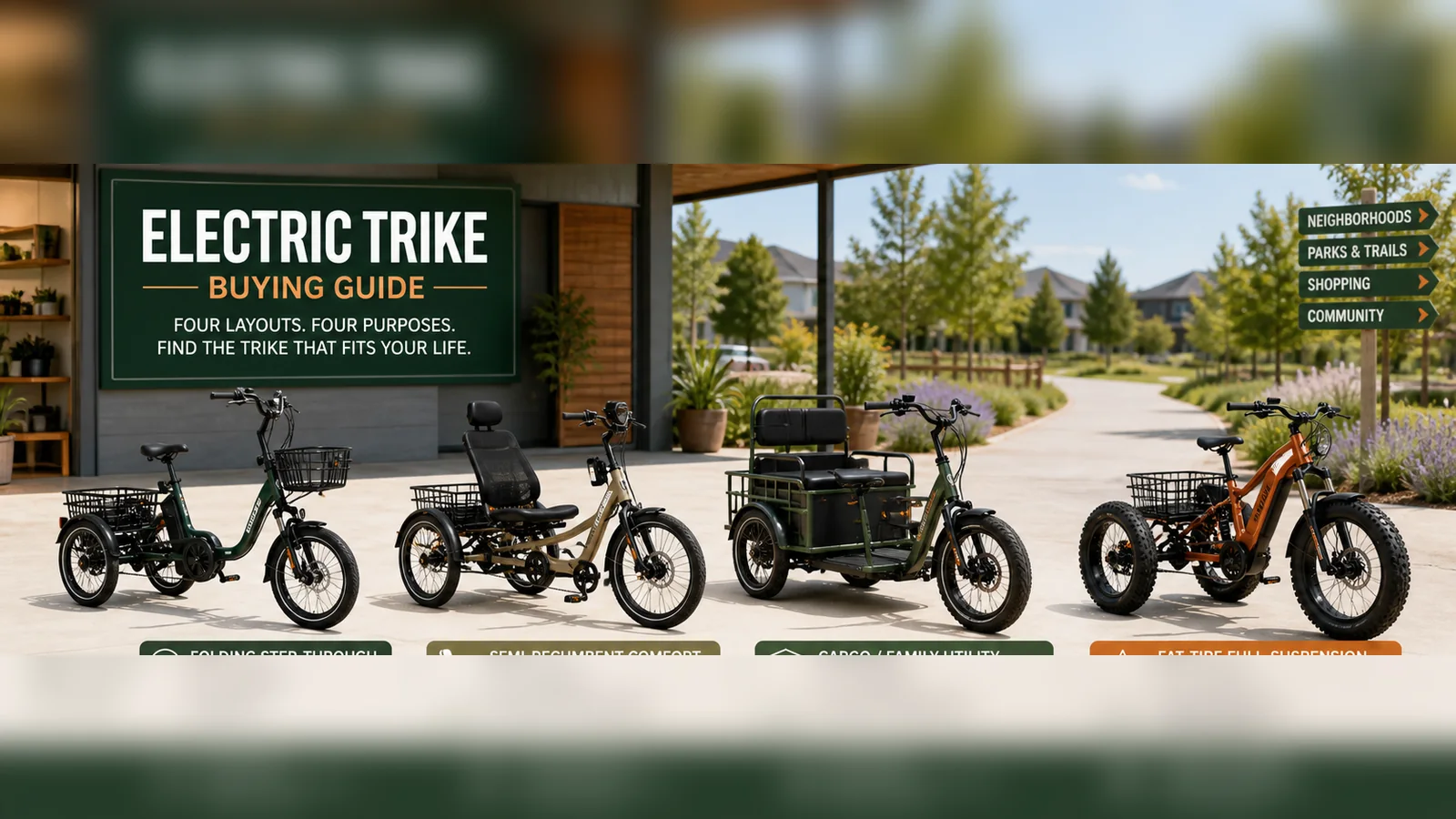
Define the job before comparing models
A short neighbourhood ride requires a different setup from carrying groceries, transporting a passenger or covering mixed surfaces. Write down your typical distance, route surface, hills, cargo, storage space and transport method. Also check local e-bike classifications, speed and access rules before ordering. A powerful motor or large battery does not override local regulations.
Frame and seating position
Step-through height, saddle position and handlebar adjustment affect confidence at stops. Semi-recumbent designs can provide a different posture and lower seating feel, while traditional upright trikes may feel more familiar. Rider-height ranges are useful screening information, but inseam, reach and mobility needs also matter. Where possible, test the riding position or confirm the retailer's return conditions before assembly.
Folding and storage
A folding trike is still wider and heavier than a folding bicycle. Check folded dimensions, total weight and whether you can safely lift it into a vehicle. Measure doorways, lifts, corridors and storage areas. If regular car transport is essential, confirm cargo-area dimensions rather than relying on the word “folding.” Battery removal may reduce lifting weight, but the remaining frame can still be substantial.
Cargo and passenger models
Family utility and cargo configurations should be compared by rated load, passenger equipment, seating, restraints, foot protection and intended use. Never infer child-carrying suitability from a basket or seat image alone. Check the official manual, accessory compatibility and local safety requirements. Passenger trikes also need careful attention to combined load and braking performance.
Range claims and real routes
Advertised range usually depends on assist level, rider and cargo weight, terrain, weather, tyre pressure and riding speed. Hills, cold weather and heavy loads can reduce range. Plan with a safety margin and compare battery capacity, charger details and replacement availability. Buyers making essential journeys should consider what happens if the battery is depleted away from home.
Tyres, suspension and handling
Fat tyres can add comfort and grip on suitable surfaces but also affect weight and rolling resistance. Full suspension may improve comfort on rough routes, though it adds components and cost. A trike handles corners differently from a two-wheel bicycle; riding technique and speed matter. Tilting trikes create another handling category, so buyers should understand the operating modes before choosing one.
Service, assembly and ownership costs
Compare warranty coverage, local service access, replacement tyres, tubes, brake parts, batteries and electronics. Professional assembly or inspection may be worthwhile, particularly for brakes, steering and wheel hardware. Include accessories, delivery, maintenance and secure storage in the total budget.
Match the category to the use
- Folding: storage and occasional transport are the priority.
- Semi-recumbent: seating posture and accessibility deserve extra attention.
- Family utility or cargo: carrying capacity and passenger safety are central.
- Passenger: combined load, seating and braking requirements matter.
- Full suspension or fat tyre: rougher routes and comfort may justify added weight.
- Tilting: understand the distinct steering and balance behaviour first.
Compare current Addmotor deals and browse automotive shopping offers, but treat the official product manual and final retailer specification as the deciding evidence.
Final checklist
- Rider height, inseam, reach and mobility needs checked
- Doorway, storage and vehicle measurements confirmed
- Load includes rider, passenger and cargo
- Realistic route range includes a reserve
- Local riding rules understood
- Warranty, assembly and service plan reviewed
Electric trike layout comparison
| Layout | Best starting use | Measure before buying | Main trade-off |
|---|---|---|---|
| Folding | Limited storage or occasional vehicle transport | Folded dimensions, doorway width and lift weight | Still larger and heavier than a folding bicycle |
| Semi-recumbent | Riders prioritising seating posture and accessibility | Seat height, reach and mounting movement | Different visibility and handling feel |
| Cargo or family utility | Groceries, equipment or approved passenger setups | Combined rated load and accessory compatibility | Greater length, weight and braking demand |
| Fat-tyre or suspension | Comfort on rougher suitable routes | Route width, storage and transport capacity | More weight and rolling resistance |
Who should buy an Addmotor trike—and who should not?
An electric trike can suit a rider who values three-wheel stability at low speed, cargo capacity or a specific seating layout and has secure storage plus an achievable service plan. It is not automatically safer in every situation: cornering behaviour differs from a bicycle, and the machine may be unsuitable where narrow access, frequent lifting or unavailable local servicing makes ownership impractical. A prospective rider with mobility or balance concerns should seek an appropriate test ride and professional advice.
How this guide was researched
CouponzWorld reviewed Addmotor's official trike categories and model-level information, then organised the guide around fit, access, load, range assumptions and ongoing service. We have not road-tested each model, and no range claim is presented as a guaranteed result. Sources were checked on 14 August 2026.
Official sources
Research basis: official Addmotor product categories, specifications, availability and ownership information reviewed in August 2026.