
A part can look correct and still be wrong for the vehicle. Use AUTODOC filters as a shortlist, then validate the original part number, vehicle specification and installation position before ordering.
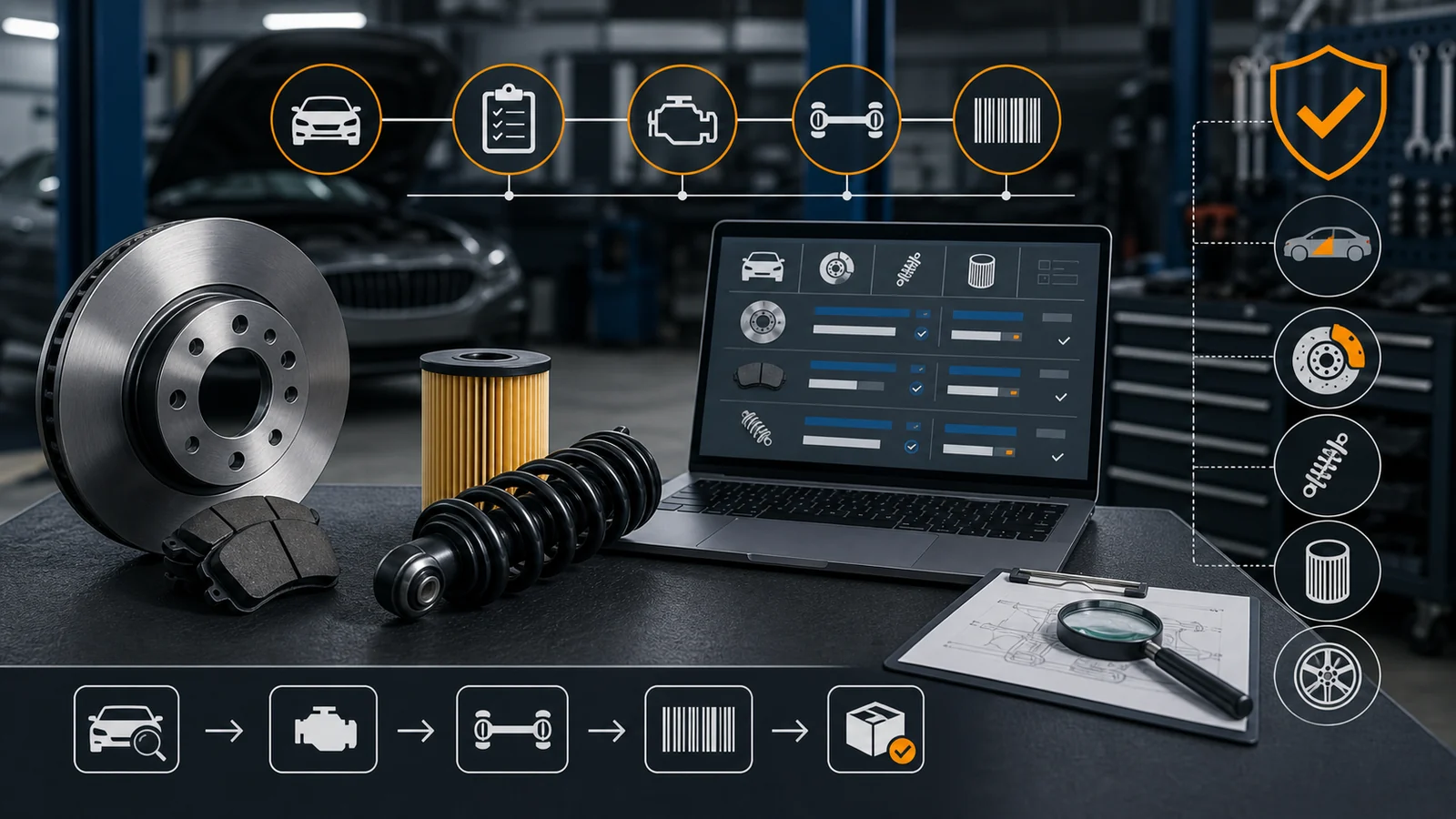
Identify the exact vehicle
Record the VIN, registration market, make, model, production date, engine code, power output, transmission and body style. A model name and year alone are not enough because manufacturers change brakes, suspension, emissions equipment and electrical connectors within the same generation.
Use the catalogue vehicle selector, but compare its result with the registration document and the existing component. Imported vehicles, mid-year changes and trim packages deserve extra care. If the listing asks for a chassis range or production cutoff, verify it rather than guessing.
Cross-check OE and manufacturer numbers
An original-equipment or cross-reference number is stronger evidence than a photo. Read the number from the removed part when practical and compare every character, suffix and revision. Similar-looking components may have different calibration, connector, diameter or mounting geometry.
A replacement brand may list several equivalents, so open the technical specification rather than relying on the title. For filters compare dimensions and media; for brakes compare disc diameter, thickness and axle; for sensors compare plug, cable and system compatibility.
Confirm installation position and quantities
Left and right, front and rear, inner and outer are not interchangeable labels. Check whether the listing contains one item, one axle set or a pair. A low price may represent a single link, pad set without hardware or bare component without seals.
List consumables and related hardware before buying: bolts, clips, gaskets, fluids, wear sensors and special tools. Some fasteners are single-use. Installation instructions and workshop specifications should determine torque and procedure, not a product-page summary.
Compare quality and total cost
Choose among economy, standard and premium brands using warranty, materials, certification and the consequence of failure. Safety-critical parts should not be selected only by price. Compare delivered cost including shipping, taxes, core charges, fitting supplies and possible return postage.
Bundling routine service items can improve shipping value, but extra items create return and storage risk. Inspect delivery dates for every line because a basket may wait for a slower component. Do not schedule workshop time until the correct goods have arrived and been checked.
Inspect before fitting
On arrival, compare packaging numbers, dimensions, connectors and mounting points with the old part. Photograph damage and labels before opening sealed inner packaging. Do not fit, mark or contaminate a questionable item; installation may limit return options and make fault diagnosis harder.
For electronic or programmed parts, verify coding, calibration and immobilizer requirements. Some components need professional diagnostic equipment. A workshop can confirm fitment and may be a better purchasing route when downtime or return complexity outweighs an online saving.
Read delivery and return conditions
AUTODOC operates regional sites, so the contracting seller, delivery estimate, cancellation process and return address can vary. Read the current terms on the country site used for checkout. Confirm exclusions for opened, installed, hazardous, custom or vehicle-specific goods.
Keep the invoice, vehicle details and correspondence. If a catalogue recommendation proves wrong, provide the VIN, selected vehicle profile, listing and photographs. Do not send parts back without the required authorization or packaging instructions.
Build a purchase worksheet before checkout
Write down the exact model, intended use, required compatibility, included items, delivery date and current policy terms. Add the delivered price, required accessories, renewal or replacement costs and a sensible return-cost allowance. This prevents a headline discount from hiding a poor configuration or a higher long-term cost.
Keep a copy of the product page, specification, policy and order confirmation that controlled the transaction. Product ranges and promotional language change, so verify every material fact again at checkout instead of assuming that a search snippet, old review or previous order still applies.
Comparison checklist
| Decision | Verify | Risk if ignored |
|---|---|---|
| Fit | Exact model and intended use | Wrong or unusable purchase |
| Specification | Required features and included items | Unexpected extra cost |
| Ownership | Delivery, accessories and renewal | Headline saving disappears |
| Policy | Return, warranty and cancellation | Limited remedy |
| Evidence | Save pages and order records | Difficult support claim |
Who should buy—and who should not?
Autodoc may suit shoppers whose exact requirements match its current range and policy terms. Buyers who cannot verify compatibility, need a different service level, or face disproportionate return costs should compare alternatives before ordering. The best choice is the one that works in the intended setting, not simply the item with the largest promotional label.
Before checkout
- Confirm the exact model, configuration, compatibility and included accessories.
- Calculate delivered and ownership cost rather than comparing the headline price alone.
- Read the current return, cancellation, warranty and regional terms for that purchase.
- Save the specification, policy and order confirmation that control the transaction.
Compare current Autodoc offers and browse related shopping categories before visiting the retailer.
How this guide was researched
CouponzWorld reviewed official product, policy and support material, separated merchant facts from editorial advice, and checked the cited sources on 14 August 2026. Temporary prices were not presented as permanent and no hands-on testing is claimed.